




Last updated: September 2026 · By the OptimumFusion Team
Quick answer: For healthy adults, creatine monohydrate is one of the most researched and safest sports supplements, and the International Society of Sports Nutrition (ISSN) 2017 position stand found the only consistently reported side effect is weight gain, mostly water stored in muscle (often about 1–2 kg). Research does not show that creatine damages healthy kidneys, causes dehydration, or causes hair loss. Mild stomach upset can happen with large single doses, so stick to 3–5 g per day.
Key Takeaways
- Creatine has been studied for over 30 years, in hundreds of trials, across athletes, older adults, and clinical groups.
- Water weight is real but harmless. It's water stored inside the muscle, not "puffy" fat under the skin.
- Creatine can raise creatinine on blood tests without meaning your kidneys are damaged. Tell your doctor you take it.
- The hair loss link is weak. It comes from one small 2009 study that never measured hair.
- Under 18, pregnant, or managing a medical condition? Speak to a doctor first.
What the Science Actually Says About Creatine Safety
The ISSN position stand on the safety and efficacy of creatine supplementation (Kreider and colleagues, Journal of the International Society of Sports Nutrition, 2017) reviewed the full body of evidence and concluded that:
- Creatine monohydrate is the most effective ergogenic nutritional supplement available for increasing high-intensity exercise capacity and lean mass.
- Short- and long-term use is safe and well tolerated in healthy people when taken at recommended doses.
- Weight gain is the only side effect consistently reported.
- Studies have not found higher rates of cramping, dehydration, or injury in people using creatine, and some have found lower rates.
A follow-up paper, "Common questions and misconceptions about creatine supplementation" (Antonio and colleagues, JISSN, 2021), addressed the most common myths one by one. Here's what they found, in plain English.
| Claim | Myth or fact? | What the research shows |
|---|---|---|
| Creatine causes hair loss | Mostly myth | One small study showed a DHT rise; no study has shown hair loss |
| Creatine damages kidneys | Myth (in healthy people) | No harm shown at recommended doses; can raise creatinine on tests |
| Creatine causes water weight | Fact | Around 1–2 kg, mostly inside the muscle cells |
| Creatine causes bloating | Sometimes | Mainly with large single doses or loading |
| Creatine causes cramps and dehydration | Myth | Studies show no increase, some show fewer cramps |
| Creatine is a steroid | Myth | It's a natural compound made from amino acids and found in meat and fish |
| You must load creatine | Myth | Loading is optional; 3–5 g daily reaches the same result in about 3–4 weeks |
Does Creatine Cause Hair Loss?
This is the most searched worry, and it traces back to one study. In 2009, van der Merwe and colleagues (Clinical Journal of Sport Medicine) gave rugby players a creatine loading phase, then a maintenance dose, and measured an increase in DHT (dihydrotestosterone), a hormone linked to male pattern hair loss in people who are genetically prone to it.
What that study didn't do:
- It didn't measure hair or hair loss at all.
- It included only about 20 young men.
- It lasted only about three weeks.
- It has never been directly replicated, and later research on creatine and testosterone-related hormones has generally shown little change.
Bottom line on hair: there's no direct evidence that creatine causes hair loss. If male pattern baldness runs strongly in your family and you're worried, talk to a doctor or dermatologist before starting.
Is Creatine Bad for Your Kidneys?
Here's where most of the confusion comes from. Creatinine is a normal waste product from creatine, and doctors use blood creatinine to estimate kidney function. Taking creatine can raise creatinine slightly, which can make a routine blood test look worse than your kidneys actually are.
- In healthy people, studies lasting from weeks up to several years at recommended doses have not shown kidney damage.
- Before a blood test, tell your doctor you take creatine. They may use other markers (such as cystatin C) or ask you to pause for a few weeks.
- If you have existing kidney disease, diabetes, high blood pressure, or take medications that affect the kidneys, don't start creatine without medical advice.
Bloating, Water Weight, and Stomach Upset
Water weight: creatine pulls water into your muscle cells. That's part of how it works, and it can make muscles look fuller. Most people gain around 1–2 kg in the first weeks, especially if they load. This isn't fat, and it isn't the soft, "puffy" bloating people imagine.
Stomach upset: a 2008 study by Ostojic and Ahmetovic found that a single 10 g dose caused more diarrhoea than two 5 g doses spread across the day. The fix is simple:
- Stick to 3–5 g per day unless you're loading.
- Split loading doses into 4 servings of about 5 g.
- Mix in at least 250–300 ml of fluid and take it with a meal if your stomach is sensitive.
If protein shakes are the real cause of your bloating, see can protein cause bloating.
Creatine, Cramps, and Dehydration in UAE Heat
The old gym advice said creatine "steals" water and causes cramps. The evidence says otherwise. Studies in college football players during demanding training (Greenwood and colleagues, 2003) found fewer cramps, heat illness, and injuries in the creatine group than in non-users. The ISSN position stand notes that creatine may even help with hydration and heat tolerance.
That said, UAE summers are serious. Training outdoors in Dubai or Abu Dhabi, or sweating hard in a warm gym, calls for good hydration whether or not you use creatine:
- Drink regularly through the day, not just at the gym.
- Use electrolytes for long, hot, or very sweaty sessions. See our guide to electrolytes for gym hydration.
- Check your urine colour: pale yellow is a good sign.
Loading and Teens: Practical Safety Points
Is Loading Needed?
| Approach | How | Muscle saturation | Side effects |
|---|---|---|---|
| No loading | 3–5 g once daily | About 3–4 weeks | Lowest chance of stomach upset |
| Loading | About 0.3 g/kg/day (around 20 g) split into 4 doses for 5–7 days, then 3–5 g daily | About 1 week | Faster water weight gain, more chance of stomach upset |
Loading is optional. It just gets you there faster. Most people in the UAE are better off skipping it and taking 5 g daily, every day, including rest days. For timing, see our muscle building supplement timing guide.
Creatine for Teens
The ISSN position stand notes that creatine appears safe in younger athletes under appropriate conditions, but teenagers should not start creatine on their own. If you're under 18, talk to a doctor and your parents first. Food, sleep, and consistent training deliver most of the results at that age anyway.
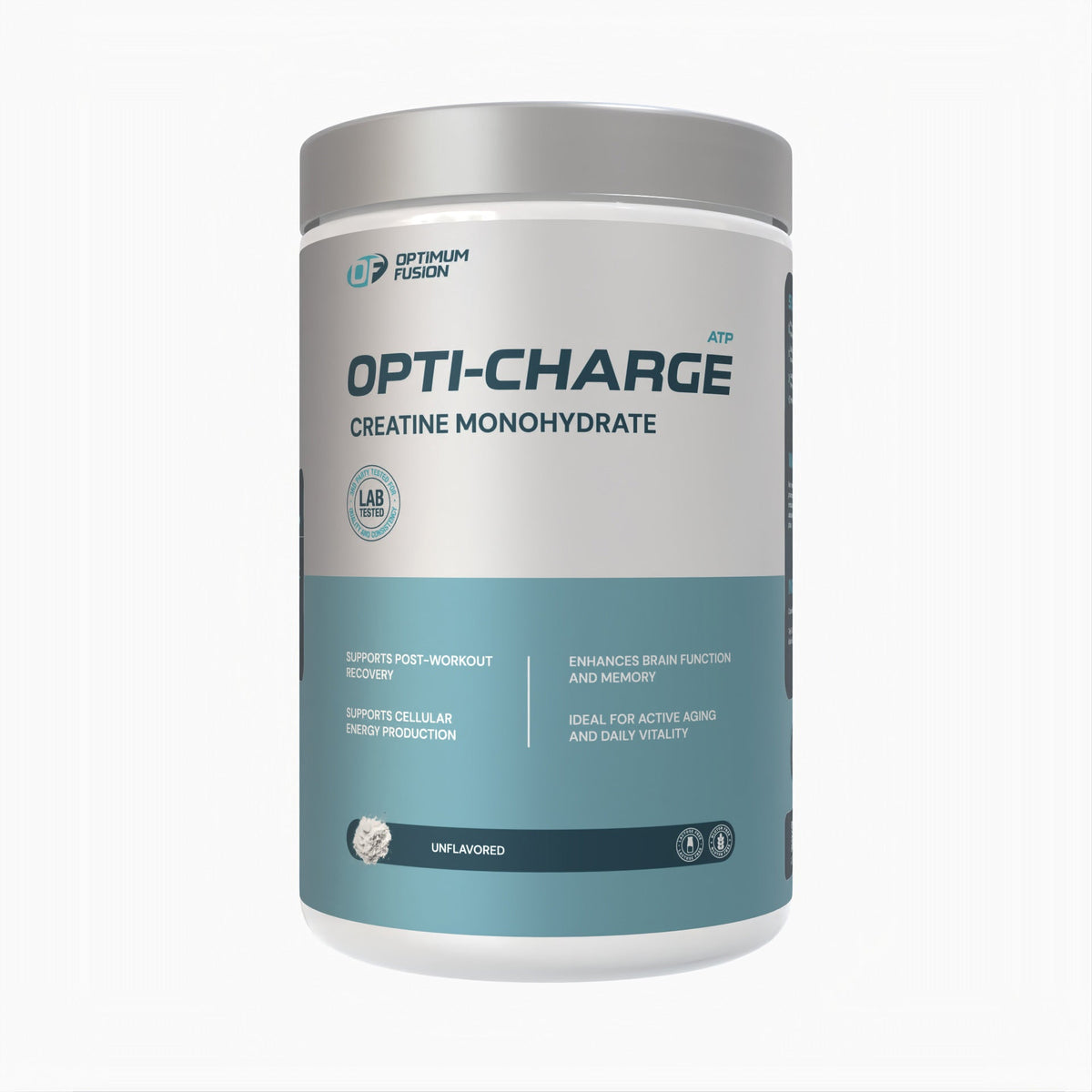
Opti-Charge ATP: Pure Creatine Monohydrate
Opti-Charge ATP keeps things simple, which is exactly what you want from creatine.
- Pure creatine monohydrate, the form used in most of the research above
- 5 g per scoop, matching the standard daily dose
- Two sizes: 330 g (66 servings) and 600 g (120 servings)
- Third-party lab tested
- Halal certified
Who it suits: lifters, team-sport athletes, and anyone wanting a single-ingredient creatine without blends.
How to use it: mix 1 scoop (5 g) in water, juice, or your protein shake once a day. Timing is flexible, so choose whatever you'll remember. Get Opti-Charge ATP here.
Health note: if you have kidney or liver disease, diabetes, take regular medication, are pregnant or breastfeeding, or are under 18, speak to a doctor before using creatine.
Frequently Asked Questions
What are the most common creatine side effects?
The most common effect is weight gain of around 1–2 kg, mostly water stored inside muscle cells. Some people get mild stomach upset or loose stools, usually from large single doses or a loading phase, which can often be avoided by sticking to 3–5 g per day.
Does creatine cause hair loss?
There's no direct evidence that it does. The concern comes from a single 2009 study that found a rise in DHT in rugby players but never measured hair loss, and the finding has not been replicated. If hair loss runs in your family, talk to a doctor if you're worried.
Is creatine safe for your kidneys?
In healthy people, research at recommended doses has not shown kidney damage. Creatine can raise creatinine on blood tests, which can look like a kidney problem when it isn't, so tell your doctor you take it. Anyone with existing kidney issues should get medical advice first.
Does creatine make you look bloated?
Creatine draws water into muscle cells rather than under the skin, so most people look fuller rather than puffy. Short-term stomach bloating can happen with large doses and usually settles with a steady 3–5 g daily dose taken with enough fluid.
Is it safe to take creatine in hot weather?
Research, including studies of athletes training in heat, has not shown that creatine increases cramps or dehydration, and some studies found fewer. In UAE heat, the key is good hydration and electrolytes for long or sweaty sessions, which applies whether or not you use creatine.
Can teenagers take creatine?
Teenagers should talk to a doctor and their parents before using creatine. Research suggests it can be used safely under proper guidance, but diet, sleep, and consistent training should come first for anyone under 18.
The Bottom Line
Most creatine fears don't hold up. For healthy adults, 5 g of creatine monohydrate a day is a safe, well-researched way to support strength and training output, with a little water weight as the main trade-off. Pair it with your right protein and calorie targets from our free macro calculator, and learn how to pick a quality product in best creatine monohydrate in the UAE and strength supplements that earn their place.
Share:
L-Glutamine Benefits: What the Evidence Says for Recovery
Vitamin D for Athletes in the UAE: Why Levels Run Low