




Last updated: September 2026 · By the OptimumFusion Team
Quick answer: The honest picture of L-glutamine benefits is this: studies in healthy lifters show little to no extra muscle or strength gain from glutamine alone. Where it looks more useful is in heavy training blocks, gut comfort during hard exercise in heat, and soreness after very damaging workouts. Common doses are 5–10 g per day, while research protocols often use about 0.3 g per kg of body weight. Take it after training or split across the day with meals.
Key Takeaways
- Glutamine is the most abundant free amino acid in your body and muscle.
- For muscle growth, the evidence is weak. Protein intake and training matter far more.
- Some research supports faster strength recovery and less soreness after eccentric-heavy training.
- Glutamine fuels gut and immune cells, which is why it's studied in heavy training and heat.
- Typical supplement doses are 5–10 g per day, and timing is flexible.
What Is L-Glutamine?
L-glutamine is an amino acid your body makes on its own, mostly in skeletal muscle. It's also in protein-rich foods like meat, fish, eggs, dairy, and beans. A normal diet provides roughly 3–6 g per day.
It's called "conditionally essential": most of the time you make enough, but during severe stress, illness, or very heavy physical demand, your needs can rise faster than production.
Glutamine's main jobs:
- Fuel for cells lining the gut, helping maintain the intestinal barrier
- Fuel for immune cells such as lymphocytes and macrophages
- Nitrogen transport between tissues
- Acid-base balance in the kidneys
That list explains where glutamine research has focused, and why its reputation as a "muscle builder" doesn't fully hold up.
L-Glutamine Benefits: What the Evidence Actually Shows
| Claimed benefit | Evidence in healthy gym-goers | Verdict |
|---|---|---|
| More muscle growth | No benefit over placebo when protein is adequate | ❌ Weak |
| More strength | No meaningful effect in training studies | ❌ Weak |
| Faster strength recovery after damaging workouts | Some positive studies | ⚠️ Promising |
| Less muscle soreness | Some positive studies | ⚠️ Promising |
| Gut barrier support during exercise in heat | Positive studies at higher doses | ✅ Moderate |
| Immune support in heavy training | Mixed; blood glutamine drops, but supplements don't clearly prevent illness | ⚠️ Mixed |
Muscle growth: the weak link
A well-known study by Candow and colleagues in the European Journal of Applied Physiology (2001) gave young adults a high glutamine dose (0.9 g per kg of lean mass daily) during 6 weeks of resistance training. Muscle size and strength improved, but no more than in the placebo group. A review by Gleeson in the Journal of Nutrition (2008) reached a similar conclusion: there's little support for glutamine as a performance or muscle-building supplement in healthy athletes.
The reason is simple. If you already eat enough protein, you already get plenty of glutamine. Protein intake, progressive overload, calories, and sleep do the heavy lifting. If you're not growing, start with our guide on why you're not gaining muscle.
Recovery and soreness: more promising
A 2015 study by Legault and colleagues in the International Journal of Sport Nutrition and Exercise Metabolism had participants do intense eccentric leg work, then take 0.3 g per kg of body weight of glutamine daily. They showed faster recovery of strength and lower soreness than placebo, with a larger effect in men. For an 80 kg lifter, that's about 24 g per day, much higher than a typical scoop.
Takeaway: glutamine may help most after unusually damaging sessions, like returning after a break, a new program, or heavy eccentric work.
Gut and immune: the heavy-training context
Hard exercise, especially in heat, reduces blood flow to the gut and can increase intestinal permeability (a "leaky" gut barrier). That can mean stomach cramps, nausea, or GI upset during long sessions.
Pugh and colleagues, in the European Journal of Applied Physiology (2017), found that glutamine taken before running in the heat reduced markers of intestinal permeability in a dose-dependent way, with the clearest effect at the highest dose (about 0.9 g per kg of fat-free mass). That's relevant for athletes training outdoors in the UAE summer, although the high doses studied aren't practical for everyday use.
Blood glutamine levels also drop after prolonged, intense training, which is why it's been linked to immune support. However, supplement studies have not clearly shown fewer illnesses in athletes.
How Much L-Glutamine Should You Take?
| Goal | Dose used | Notes |
|---|---|---|
| General recovery support | 5–10 g per day | Common practical dose |
| Heavy training block, damaging sessions | 0.2–0.3 g per kg per day | Based on soreness research; split into 2–3 servings |
| Gut support in heat (research) | Up to 0.9 g per kg of fat-free mass, once | Research only; not an everyday dose |
Glutamine is generally well tolerated at these amounts in healthy adults. Start at 5 g and increase gradually. Very large single doses may cause stomach discomfort in some people, so splitting the dose is smarter.
When to Take Glutamine
Timing matters less than total daily intake. Practical options:
- After training: mixed into your post-workout shake or water
- Before bed: with your evening meal
- Split across the day: best for higher doses (for example, 5 g after training and 5 g before bed)
- Before long hot sessions: if gut comfort is your goal, 60–90 minutes before training
Glutamine is tasteless and mixes easily, so it fits into a protein shake, EAA drink, or plain water. For how it fits into a wider plan, see our muscle building supplement timing guide.
Who Might Benefit Most?
Glutamine is not a first-priority supplement. Protein, creatine, and good hydration come first. It becomes more reasonable if you:
- Train very frequently or twice per day
- Do long sessions in UAE heat and deal with stomach discomfort
- Are in a high-volume or new program with heavy soreness
- Struggle to hit your protein targets from food on certain days
If you're still building your basics, check strength supplements that earn their place.
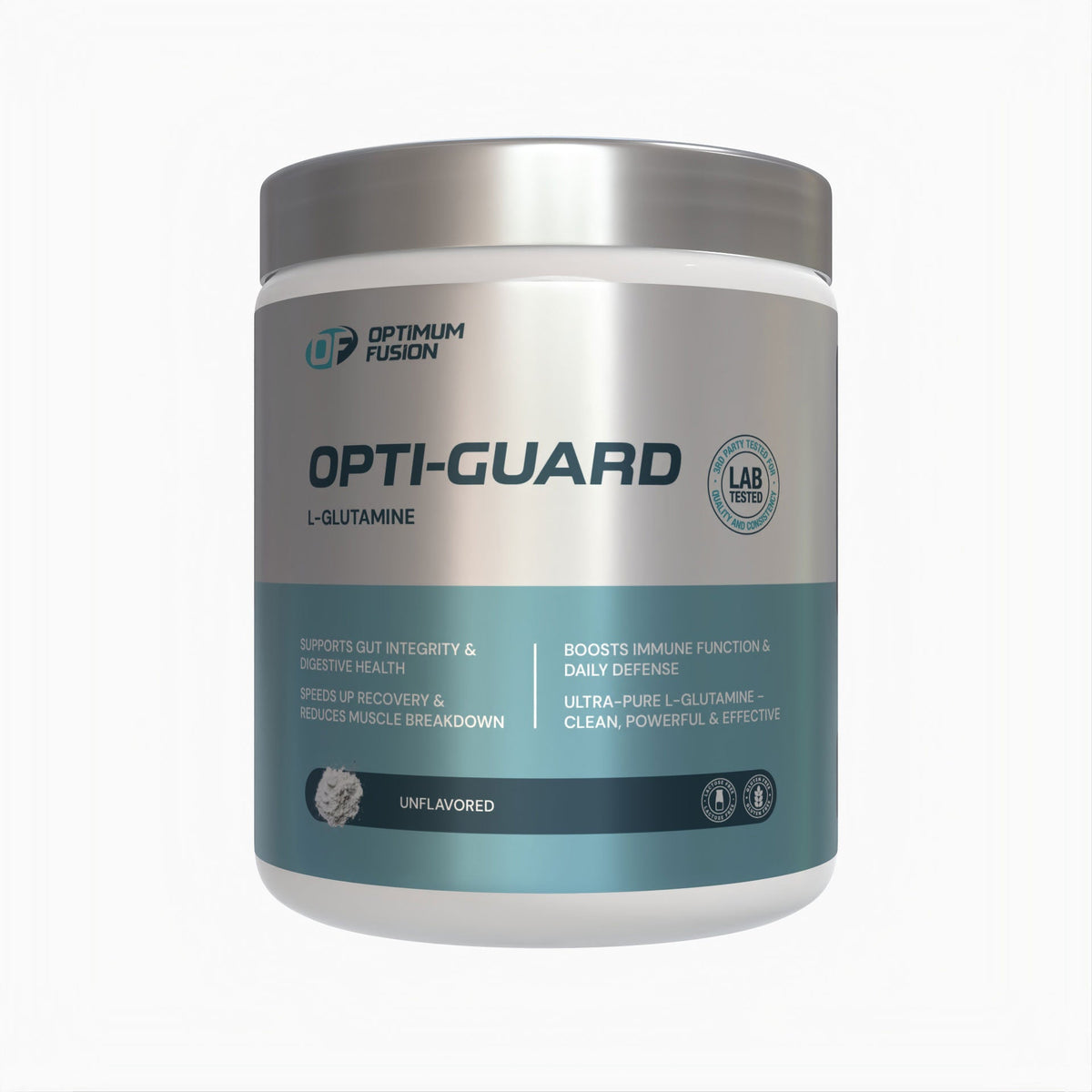
Opti-Guard: Pure L-Glutamine
Opti-Guard keeps things simple: one ingredient, clearly dosed.
What's in each scoop:
- 5 g of pure L-Glutamine
- 70 servings per container
- Third-party lab tested
- Halal certified
Who it suits:
- Lifters in high-volume or high-frequency training
- Athletes doing long, hot outdoor sessions in Dubai, Abu Dhabi, or elsewhere in the UAE
- Anyone who wants a clean, single-ingredient product to add to an existing stack
How to use it:
- Standard: 1 scoop (5 g) daily, after training or with a meal
- Heavy training blocks: 1 scoop after training plus 1 scoop in the evening (10 g total)
- Mix into water, a protein shake, or your intra-workout drink
Add Opti-Guard to your recovery routine once your protein and sleep are in place.
Health note: if you have kidney or liver disease, a seizure disorder, are pregnant or breastfeeding, take regular medication, or are under 18, talk to a doctor before using glutamine.
Frequently Asked Questions
Does L-glutamine build muscle?
Research in healthy lifters who eat enough protein shows glutamine does not add extra muscle or strength compared with placebo. It may support recovery in some situations, but protein intake, training, and sleep are what build muscle.
What are the main L-glutamine benefits for gym-goers?
The most promising benefits are faster strength recovery and less soreness after very damaging workouts, plus possible gut support during hard exercise in the heat. These effects are strongest at doses higher than a single scoop, so expectations should be realistic.
How much glutamine should I take per day?
Most people use 5–10 g per day. Research on soreness has used about 0.3 g per kg of body weight daily, which is best split into two or three servings to stay comfortable on the stomach.
When is the best time to take glutamine?
Total daily intake matters more than exact timing. After training or with an evening meal are easy options, and splitting the dose across the day works well if you take more than 5 g.
Can I take glutamine with protein powder and creatine?
Yes, glutamine mixes easily with protein shakes, creatine, and intra-workout drinks. It's tasteless, so it won't change the flavour of your shake.
Is glutamine safe to take every day?
In healthy adults, glutamine at common supplement doses is generally well tolerated in research. Anyone with kidney or liver conditions, who takes medication, or who is pregnant or under 18 should check with a doctor first.
The Bottom Line
L-glutamine isn't a muscle builder, and it's fine to say so. Its real value is as a support tool for heavy training, soreness after damaging sessions, and gut comfort in the heat. Get your protein right first using our free macro calculator, then read our guide to post workout recovery supplements to build a complete recovery plan.
Share:
Beef Protein for Fat Loss: Cutting Guide with Meal Plans (kg)
Creatine Side Effects: Myths vs Facts (Hair, Kidneys, Bloating)