




Last updated: September 2026 · By the OptimumFusion Team
Quick answer: Whey protein isolate is one of the most practical proteins for cutting because it delivers a lot of protein for very few carbs and fat. During a calorie deficit, most lifters do well on 1.8–2.7 g of protein per kg of body weight per day, split into 3–5 meals of roughly 25–40 g each. One or two scoops of isolate can close the gap without eating into your calorie budget. If halal status matters to you, choose a halal-certified isolate such as Opti-Isolate, and always check for a recognised certification mark.
Key Takeaways
- Protein needs go up, not down, when you cut. Higher protein helps you hold on to muscle while you lose fat.
- Isolate is filtered further than concentrate, so it is typically lower in carbs, fat, and lactose per scoop.
- A shake is a tool, not a diet. Your calorie deficit and training do the fat loss; protein protects the muscle.
- Timing is flexible. Hitting your daily total matters more than drinking a shake within minutes of training.
- Halal status is shown by certification, not by the ingredient list alone. Learn how to check any label below.
Why Protein Matters More When You Are Cutting
When you eat fewer calories than you burn, your body looks for energy everywhere, including muscle tissue. Lifting heavy and eating enough protein are the two strongest signals that tell your body to keep that muscle.
The International Society of Sports Nutrition (ISSN) position stand on protein and exercise (2017) recommends 1.4–2.0 g/kg per day for most active people and notes that higher intakes may help preserve lean mass during a deficit. A widely cited 2014 review by Helms and colleagues in the Journal of the International Society of Sports Nutrition suggested 2.3–3.1 g per kg of lean body mass for lean, resistance-trained athletes in a calorie deficit.
In practice, that works out to about 1.8–2.7 g per kg of total body weight for most lifters cutting in Dubai or Abu Dhabi gyms.
| Body weight | Protein target when cutting (1.8–2.7 g/kg) |
|---|---|
| 60 kg | about 108–162 g per day |
| 70 kg | about 126–189 g per day |
| 80 kg | about 144–216 g per day |
| 90 kg | about 162–243 g per day |
| 100 kg | about 180–270 g per day |
Protein also has two useful side benefits in a diet: it is the most filling macronutrient, and your body uses more energy digesting it than it does carbs or fat.
Isolate vs Concentrate for a Cut
Both are whey. The difference is how much filtering happens. For a detailed muscle-building comparison, read whey isolate vs concentrate.
| Feature | Whey isolate | Whey concentrate |
|---|---|---|
| Protein content | Typically 90%+ by weight | Typically 70–80% by weight |
| Carbs and fat | Very low | Higher |
| Lactose | Very low | Higher |
| Calories per gram of protein | Lower | Slightly higher |
| Best for | Cutting, tight macros, lactose-sensitive lifters | Budget-friendly bulking if dairy sits well |
During a cut, those extra carbs and fat grams from concentrate are small but they add up across 1–2 shakes a day, every day, for 12 weeks. Isolate keeps your calorie budget for real food. If dairy bothers you, see our guide to lactose-free protein powder in Dubai.
How to Use Whey Isolate in a Calorie Deficit
Spread your protein across the day. Research on muscle protein synthesis suggests roughly 0.3–0.4 g/kg per meal (about 25–40 g for most people), repeated every 3–5 hours, is an effective pattern.
Example day for a 75 kg lifter cutting at about 150 g protein:
| Meal | Food | Protein |
|---|---|---|
| Breakfast | 3 eggs + 150 g Greek yoghurt | about 33 g |
| Lunch | 150 g grilled chicken, rice, salad | about 45 g |
| Post-workout | 1 scoop whey isolate in water | about 26 g |
| Dinner | 150 g fish or lean beef, vegetables | about 38 g |
| Evening | Half scoop isolate or cottage cheese | about 10–13 g |
Practical tips for cutting:
- Mix with water and ice, not milk, to keep calories low. Cold shakes are easier in UAE summer heat anyway.
- Use it to replace a snack, not to add on top of your current diet.
- Blend with ice and a little fruit for a thicker, more filling "dessert" that fits your macros.
- Don't drink all your protein. Whole foods bring fibre and volume that help control hunger.
For when to take it around workouts, see our workout nutrition timing guide.
Halal Whey Protein in the UAE: How to Check Any Label
For many shoppers in the UAE, halal status is a deal-breaker. The honest rule: you cannot confirm halal status from the ingredient list alone. Whey is a by-product of cheese-making, and the enzymes used (rennet), flavourings, carriers, and processing aids can all matter. Only a certification from a recognised body confirms how the product was sourced and made.
Here is how to check any protein powder:
- Look for a halal logo on the pack. It should name the certifying body, not just say "halal" in plain text.
- Find a certificate number or ask the seller for a copy of the current certificate.
- Check the expiry date on the certificate. Certificates are renewed and can lapse.
- Verify with the certifier. Many certification bodies list certified products or companies on their websites.
- Check that the certificate covers the exact product and flavour, not just the brand or factory.
- In the UAE, the national halal system is overseen by the Ministry of Industry and Advanced Technology (MoIAT), which recognises specific certification bodies. If in doubt, ask whether the certifier is recognised in the UAE.
About Opti-Isolate: Opti-Isolate, like every OptimumFusion product, is halal certified. You can still use the checklist above for any brand you consider.
Opti-Isolate: A Lean Protein for Cutting Phases
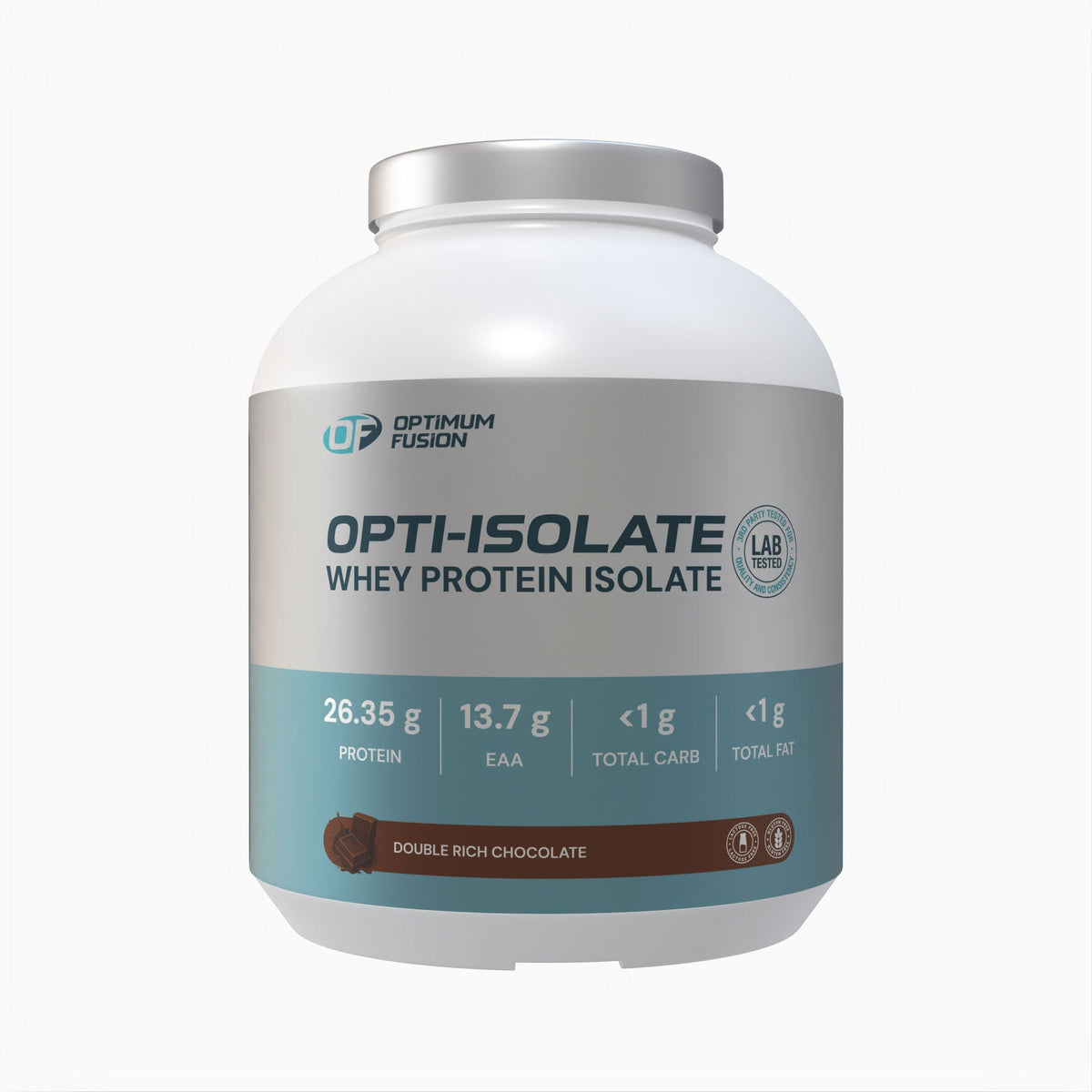
Opti-Isolate is our whey protein isolate built for lifters who want high protein with minimal extras.
Per scoop:
- 26.35 g protein
- 13.7 g EAAs, including 7 g BCAAs
- 0.62 g carbs
- 0.775 g fat
- 72 servings per tub
- Flavours: Double Rich Chocolate and Vanilla
- Third-party lab tested
- Halal certified
Based on the listed macros, that is roughly 115 calories per scoop, with almost all of it coming from protein.
Who it suits:
- Lifters in a cutting or recomposition phase counting every gram of carbs and fat
- People who find whey concentrate too heavy on the stomach
- Anyone who needs a quick 26 g protein hit between meetings, after training, or on the drive home
How to use it: mix 1 scoop in 250–300 ml of cold water, shake, and drink after training or as a planned snack. Most cutting lifters use 1–2 scoops per day, depending on how much protein they already get from food. Order Opti-Isolate here.
Health note: if you have kidney disease, a diagnosed dairy allergy, are pregnant or breastfeeding, or are under 18, speak to a doctor or dietitian before increasing your protein intake or using protein supplements.
Frequently Asked Questions
Is whey isolate good for cutting?
Yes. Whey protein isolate is one of the most practical options for cutting because it provides a high amount of protein with very few carbs and fat, which makes it easier to hit a high protein target inside a calorie deficit. It works best as part of a diet built around whole foods and a consistent training plan.
How much whey isolate should I take per day when cutting?
Most people use 1–2 scoops per day. Work out your total daily target first, usually around 1.8–2.7 g of protein per kg of body weight during a cut, then use isolate to fill whatever gap your meals leave rather than replacing all your food with shakes.
Will whey isolate make me gain weight?
Protein only causes weight gain if it pushes you above your daily calorie needs. A scoop of isolate is low in calories, so if you use it to replace a higher-calorie snack and keep your overall deficit, it supports fat loss rather than weight gain.
Should I take whey isolate before or after a workout?
Either is fine. Research suggests total daily protein and even distribution across meals matter more than exact timing. Many lifters take it after training for convenience, but a shake in the hour before a session works just as well.
How do I know if a whey protein is halal in the UAE?
Look for a halal logo that names a recognised certification body, find the certificate number, check that it is current and covers the specific product, and verify it with the certifier. The ingredient list alone cannot confirm halal status, so ask the seller for the certificate if it is not clear on the pack. All OptimumFusion products, including Opti-Isolate, are halal certified.
Is whey isolate safe for lactose intolerance?
Whey isolate is very low in lactose, and many people with mild lactose intolerance tolerate it well. People who are very sensitive may still react, and anyone with a true milk allergy should avoid whey completely and consider a dairy-free option such as hydrolyzed beef protein.
The Bottom Line
Cutting is about keeping your muscle while the fat comes off, and a high protein intake is your best tool for that. Whey isolate makes hitting those numbers easier without spending calories on extra carbs and fat. Set your exact protein and calorie targets with our free macro calculator, then read our macro calculator usage guide to adjust as your weight drops. For a dairy-free alternative, see hydrolyzed beef protein in the UAE.
Share:
Top Supplements for Healthy Joints: What Works for Lifters (UAE)
Beef Protein for Fat Loss: Cutting Guide with Meal Plans (kg)