




Last updated: September 2026 · By the OptimumFusion Team
Quick answer: Cluster dextrin vs maltodextrin comes down to molecule size and osmolality. Cluster dextrin (highly branched cyclic dextrin, HBCD) is a very large, ring-shaped carb molecule that makes a low-osmolality drink, and early research suggests it may leave the stomach faster and feel lighter during training. Maltodextrin is cheaper and works well, but at higher concentrations it can feel heavier. For intra-workout use in UAE heat, a practical target is 30–60 g of carbs per hour in sessions longer than about 60–90 minutes.
Key Takeaways
- Both are carbohydrates made from starch and both end up as glucose in your blood.
- Cluster dextrin has a much larger molecular weight, so the same grams of carbs produce a drink with lower osmolality.
- Lower osmolality may support faster gastric emptying, which can mean less sloshing and bloating mid-session.
- Maltodextrin is effective and affordable, but concentrated shakes can sit heavy for some people.
- In hot conditions, a carb source that's easy on the stomach makes it easier to keep drinking and stay fuelled.
What Are Cluster Dextrin and Maltodextrin?
Both come from starch, usually corn or potato. The difference is how the starch is broken down and rebuilt.
Maltodextrin is made by partially breaking starch into shorter glucose chains. It's rated by dextrose equivalent (DE), usually between 3 and 20. Higher DE means shorter chains, a sweeter taste, and a faster rise in blood sugar.
Cluster dextrin (the trade name for highly branched cyclic dextrin, or HBCD) is made with a branching enzyme that joins starch fragments into a large ring with many branches. The result is a molecule far bigger than typical maltodextrin chains, which is why it behaves differently in water and in the stomach.
| Feature | Maltodextrin | Cluster dextrin (HBCD) |
|---|---|---|
| Source | Starch (corn, potato, rice) | Starch (usually corn) |
| Structure | Short to medium linear/branched chains | Large ring with many branches |
| Molecular size | Small to medium | Very large |
| Osmolality in solution | Moderate | Low |
| Taste | Slightly sweet | Almost neutral |
| Blood sugar response | Fast, high glycaemic | Steady; research suggests a smaller spike |
| Cost | Low | Higher |
Why Osmolality Matters
Osmolality describes how many dissolved particles are in a drink. It matters because your gut responds to it.
Your blood sits at roughly 285–295 mOsm/kg. Drinks near this level are called isotonic. Drinks well above it are hypertonic, and those tend to:
- Slow gastric emptying, so fluid stays in the stomach longer
- Pull water into the intestine before absorption
- Increase the chance of bloating, cramping, or a "sloshy" stomach
Here's the key point: osmolality depends on the number of particles, not the grams of carbs. Because cluster dextrin molecules are so large, 30 g of HBCD produces far fewer particles than 30 g of glucose or high-DE maltodextrin. That's why an HBCD drink can carry a meaningful carb dose while staying low in osmolality.
| Drink (same grams of carbs) | Relative particle count | Likely osmolality |
|---|---|---|
| Glucose/dextrose | Very high | Hypertonic at typical sports doses |
| High-DE maltodextrin | Medium | Moderate; can climb when mixed strong |
| Low-DE maltodextrin | Lower | Moderate |
| Cluster dextrin (HBCD) | Very low | Low, even at higher concentrations |
Gastric Emptying: What the Research Says
A study by Takii and colleagues in the International Journal of Sports Medicine (2005) compared drinks containing HBCD with glucose drinks and found that the HBCD solution emptied from the stomach faster. Later small studies from Japanese research groups, including work by Furuyashiki and colleagues, reported lower perceived exertion during endurance exercise when athletes drank HBCD compared with glucose.
Be realistic about the evidence:
- Most studies are small and many involve researchers linked to the ingredient's development.
- Comparisons are usually against glucose, not always against maltodextrin directly.
- Performance differences are modest. The clearest benefit is gut comfort and ease of drinking, not magic energy.
What is well established is the general rule from sports nutrition guidelines: during exercise lasting about 1–2.5 hours, 30–60 g of carbs per hour can support performance (American College of Sports Medicine and sports nutrition reviews by Jeukendrup). Whatever helps you actually drink that amount comfortably is the right tool.
When to Use Each One
| Situation | Better fit | Why |
|---|---|---|
| Long leg or back sessions (75+ minutes) | Cluster dextrin | Easy to sip steadily without a heavy stomach |
| Two-a-day training | Cluster dextrin or maltodextrin | Refuel glycogen between sessions |
| Endurance, football, combat sports | Cluster dextrin | Low osmolality helps with fluid intake |
| Post-workout shake with protein | Either | Stomach comfort matters less at rest |
| Adding calories on a bulk | Either | Total calories matter most |
| Short 45-minute session, fed | Neither needed | Your last meal covers it |
If you're mainly trying to add calories for a bulk, our guide to clean carbohydrate powder for bulking covers amounts, shake ideas, and how to track your weight gain. This article is focused on choosing the carb type, especially for training.
Training in UAE Heat: Why Carb Type Matters More
Heat changes how your gut behaves. When you train outdoors in Dubai or Abu Dhabi, or in a warm gym after a hot commute, blood flow shifts toward your skin to cool you down, and less goes to your digestive system. That makes a heavy, concentrated drink harder to tolerate.
In the heat, a good intra-workout carb drink should:
- Be easy to sip without bloating
- Combine fluid and fuel in one bottle
- Stay tolerable at 500–1,000 ml per hour of fluid intake
- Pair with sodium if you're sweating heavily
A simple approach is to mix one serving of carbs in 500–750 ml of water, add an electrolyte source, and sip every 10–15 minutes. Read more about sodium targets in our guide to electrolytes for gym hydration.
Tip: test any new intra-workout drink on a normal training day first, never on competition day.
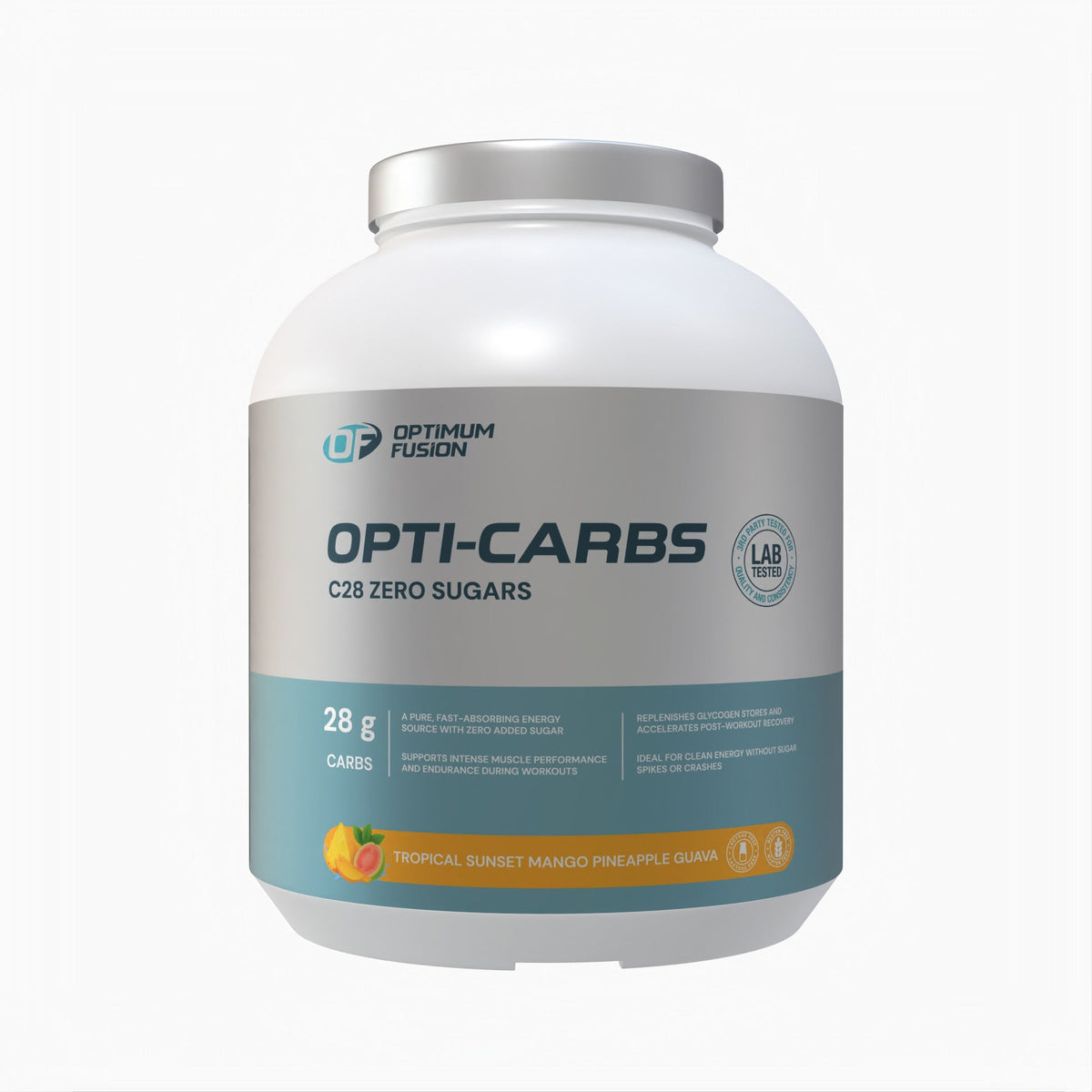
Opti-Carbs: Cluster Dextrin in a Simple Formula
Opti-Carbs is built around one ingredient choice: cluster dextrin (highly branched cyclic dextrin).
What's in each scoop:
- 28 g of carbohydrates from Cluster Dextrin
- Zero sugar
- 73 servings per container
- Third-party lab tested
- Halal certified
Who it suits:
- Lifters doing long, high-volume sessions who fade in the second half
- Athletes training outdoors or in hot gyms in the UAE
- Anyone who finds maltodextrin or sugary drinks sit heavy during training
- People doing two-a-days who need to refuel between sessions
How to use it:
- During training: 1 scoop (28 g carbs) in 500–750 ml water, sipped across the session. For sessions over 90 minutes, a second scoop brings you to about 56 g of carbs.
- Before training: 1 scoop 20–30 minutes before if you're training a few hours after your last meal.
- After training: mix with protein to support glycogen refilling.
You can also combine it with an EAA + electrolyte drink for a full intra-workout. See our workout nutrition timing guide for how to plan the rest of your day. Explore Opti-Carbs here.
Health note: if you have diabetes, blood sugar issues, or are under 18, talk to your doctor before using carbohydrate supplements.
Frequently Asked Questions
Is cluster dextrin better than maltodextrin?
Cluster dextrin isn't "better" for everyone, but it has a clear advantage for drinking during training. Its large molecules create a low-osmolality drink that research suggests may leave the stomach faster and feel lighter, while maltodextrin is cheaper and works fine when stomach comfort isn't an issue.
Does cluster dextrin spike blood sugar?
Cluster dextrin is still a carbohydrate that is digested into glucose, so it raises blood sugar. Some studies suggest the rise is steadier than with glucose, but it is not a low-carb or blood-sugar-free product, so people with diabetes should get medical advice first.
How many grams of cluster dextrin should I take during a workout?
A practical range is 25–30 g for sessions of 60–90 minutes and up to 30–60 g per hour for longer or harder sessions. Start at the lower end, sip it gradually in 500–750 ml of water, and increase only if your stomach handles it well.
Can I mix cluster dextrin with protein?
Yes, mixing it with protein after training is a convenient way to get carbs and protein in one shake. During training, many people prefer carbs with EAAs or electrolytes because a full protein shake can feel heavy mid-session.
Is cluster dextrin good for training in hot weather?
It can be a good fit because its low osmolality makes it easier to drink while your gut is under stress from heat. Pair it with enough fluid and sodium, and test it on normal training days before relying on it for long outdoor sessions in the UAE.
Can I use cluster dextrin while cutting?
You can, but every scoop still adds calories, so it needs to fit your daily targets. Many people on a cut keep it for their hardest or longest sessions only and skip it on short, easy training days.
The Bottom Line
Maltodextrin and cluster dextrin both fuel training. The difference is how they feel in your stomach. If you train long, hard, or in UAE heat and struggle with heavy intra-workout drinks, cluster dextrin's low osmolality makes it easier to keep fuelling. Work out your daily carb and protein targets with our free macro calculator, and see how carbs fit into your recovery plan in our guide to post workout recovery supplements.
Share:
Tongkat Ali, Fenugreek & D-Aspartic Acid: What Research Says
High Protein Diet Plan for Beginners UAE: Meals & Targets